How to Make AI Scary Story Reels That Keep Viewers Watching
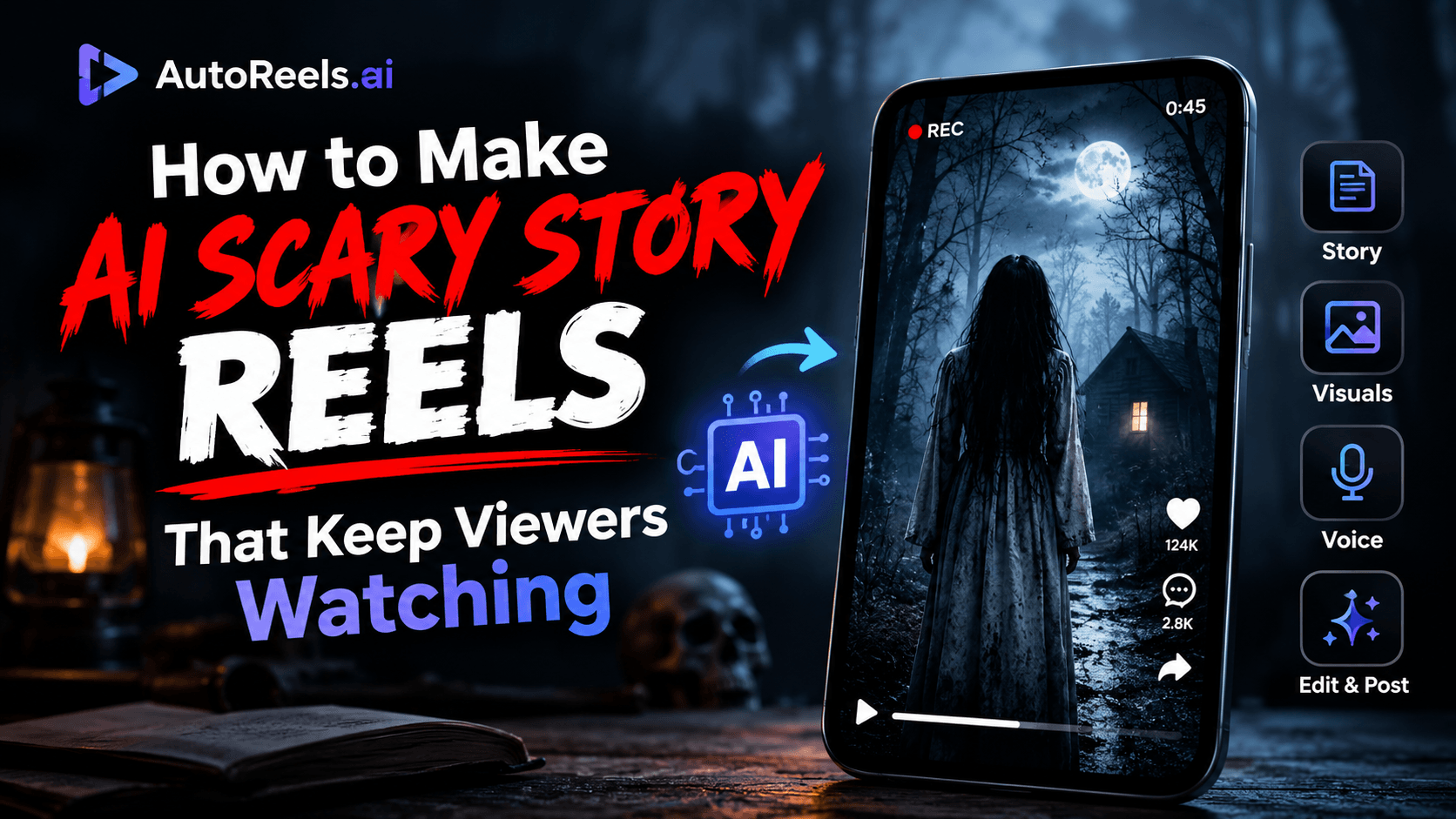
Scary stories are one of the most reliable niches in faceless content. A good one does something most short videos can't: it makes viewers stay until the very last second, because they need to know how it ends. That kind of watch time is exactly what TikTok, Instagram Reels and YouTube Shorts reward.
The format is also perfect for AI. Horror doesn't need a face on camera. It needs a tense voice, dark atmospheric visuals, slow-building music and a twist that lands. AI can now produce all of those in minutes.
In this guide, you'll learn how to make AI scary story reels step by step: how to structure a story that holds attention, which sub-niches work best, the voice and visual settings that make horror feel real, and how to post daily without burning out.
The anatomy of a scary story reel
Almost every horror reel that performs follows the same four beats. Build your scripts around them.
- The hook (0–3 seconds). Start inside the strangest moment, not at the beginning. "Every night at 3:07, my daughter whispers a name I've never heard." No introduction, no logo.
- The build (3–40 seconds). Add two or three concrete, unsettling details, each one worse than the last. Specific details (a time, a sound, an object) feel more real than vague dread.
- The twist (40–55 seconds). Reveal the detail that changes everything. The best twists recontextualize the hook: the viewer suddenly understands what they heard at the start.
- The loop (last 2–3 seconds). End on a line that sends viewers back to the beginning, or tease part 2. Rewatches and follows both boost reach.
Keep the whole story between 45 and 60 seconds. That's enough time to build tension and short enough that most viewers finish.
How to make AI scary story reels, step by step
Here's the full process using AutoReels. The same principles apply to any AI video tool.
Step 1: Pick a horror sub-niche
"Scary stories" is broad. Narrow it to one angle your audience can recognize: true-feeling paranormal encounters, creepy historical events, urban legends or short psychological horror. A clear sub-niche helps the algorithm find the right viewers. (Ideas below.)
Step 2: Write a prompt that forces the four beats
A vague prompt gives vague stories. Give the AI the structure. For example:
Write a 50-second first-person scary story. Open with a disturbing specific detail, add three escalating clues, end with a twist that changes the meaning of the first line. No gore. Last line should make the listener want to rewatch.
Use this as your series prompt so every video follows the same proven structure while telling a new story.
Step 3: Choose a dark art style
Pick one style and keep it for the whole series so your account is recognizable in the feed. Dark, desaturated or comic-style illustrations work well for horror. Avoid bright, cheerful styles: they fight the mood of the story.
Step 4: Pick a narrator that fits
The voice carries most of the fear. Choose a calm, low, slightly slow narrator. Overly dramatic voices tend to sound fake; understated delivery is creepier.
Step 5: Add tense background music
Use low ambient drones or slow, minimal tracks, mixed quietly under the voice. The music should build unease, not compete with the narration.
Step 6: Review the script before it posts
On AutoReels paid plans, every upcoming video sits on a calendar where you can edit the script, music and title before it goes live. Spend 30 seconds per story checking that the hook is strong and the twist actually lands.
Step 7: Schedule daily posts
Horror audiences binge. Daily posting keeps your account in their feed and gives the algorithm more chances to push a story viral. With AutoReels, the Daily plan publishes one story a day, and Hardcore publishes two, to TikTok, YouTube, Instagram and Facebook.
Step 8: Turn winners into series
When a story takes off, make a part 2, or more stories with the same setting or hook style. Multi-part stories bring viewers back to your profile and turn views into follows.
Scary story reel ideas by sub-niche
Use these as series prompts or as inspiration for your own angle:
Sub-niche | Example hook | Why it works |
|---|---|---|
Paranormal encounters | "The baby monitor picked up a second voice. It knew my name." | Everyday objects turned threatening feel close to home |
Creepy history | "In 1518, a whole town started dancing and couldn't stop." | Real events make viewers search and share |
Urban legends | "Never answer the door if they knock exactly three times." | Familiar rules invite comments and debate |
Night-shift stories | "My first rule as a night guard: never check camera 4." | Rules-based horror creates instant tension |
Psychological horror | "My reflection blinked. I didn't." | Short, punchy twists suit 30–45 second reels |
Abandoned places | "The hospital closed in 1992. The lights still turn on at midnight." | Strong visuals for AI-generated scenes |
"Something's wrong" stories | "My wife came home early. My wife is also asleep upstairs." | Two-line setups make perfect hooks |
Pick one sub-niche and post at least 30 stories before switching. Your best-performing hooks will tell you what your audience wants more of.
Voice, visuals and music settings that work for horror
Element | Works | Avoid |
|---|---|---|
Narrator | Low, calm, slightly slow voice | Shouting, theatrical or cartoonish voices |
Pace | Short pauses before key reveals | Rushed delivery that kills suspense |
Art style | Dark, muted or comic-style illustration, kept the same every video | Bright colors, switching styles between videos |
Captions | Large white text, centered, a few words at a time | Long blocks of text that spoil the twist early |
Music | Low ambient drones, quiet under the voice | Loud tracks or jump-scare sound effects every few seconds |
Length | 45–60 seconds | Over 90 seconds while you're still growing |
One more tip: don't reveal the twist in the caption or title. Use a question instead, such as "Would you have opened the door?", so viewers have to watch to the end.
Mistakes to avoid (and platform rules to respect)
- Using graphic violence or gore. Platforms limit or remove graphic content, and it can make videos ineligible for monetization. Suggest rather than show: fear comes from what viewers imagine.
- Presenting fiction as real news. "Based on a true story" framing is part of the genre, but don't use real victims' names or recent tragedies. It can break platform rules and upset audiences.
- Copying famous creepypastas word for word. Retelling someone else's story verbatim can lead to copyright claims. Write original stories, or use public-domain legends in your own words.
- Reusing the same story with small changes. Platforms reduce reach for repetitive, mass-produced content. Every video needs a new story.
- Weak hooks. If the first line is "This story happened to my friend", most viewers are gone. Start with the strangest detail.
- Spoiling the twist in the thumbnail, title or caption.
- Inconsistent posting. Horror audiences follow accounts they can binge. Two posts a week won't build that habit; daily posting will.
Frequently asked questions
Can AI make scary story videos?
Yes. AI can write the story, generate dark visuals for each scene, narrate it with a realistic voice and add captions and music. Tools like AutoReels combine all of this and post the finished reels automatically.
How long should a scary story reel be?
Aim for 45 to 60 seconds. That's long enough to build tension and land a twist, and short enough that most viewers finish.
Are AI horror reels allowed on TikTok and Instagram?
Yes, as long as they follow each platform's rules: no graphic violence or gore, no content about real recent tragedies, and original content rather than reposted or near-identical videos.
Can you make money with AI scary story reels?
Horror channels can earn through platform programs once they meet the requirements, as well as through sponsorships and affiliate links. Strong watch time, which horror tends to deliver, helps with all of these.
What's the best voice for horror reels?
A calm, low, slightly slow narrator usually works best. Understated delivery feels more unsettling than an exaggerated "spooky" voice.
How often should I post horror reels?
Once a day is a strong starting point. Horror audiences like to binge, so a consistent daily schedule helps turn viewers into followers.
Start your horror channel tonight
AI scary story reels work because the formula is simple and repeatable: a hook that grabs, details that build dread, a twist that lands, and an ending that sends viewers back to the start. AI handles the production. Your job is to pick a sub-niche and stay consistent.
With AutoReels, you set up a horror series once (your prompt, a dark art style, a low narrator and ambient music) and a new story is generated and posted every day to TikTok, YouTube, Instagram and Facebook. Plans start at $12/month billed yearly.
Create your horror series with AutoReels →
New to faceless content? Start with how to make faceless reels with AI.