One Idea, 30 Videos: How to Build a Faceless Content Machine

Creators rarely run out of things to say. They run out of ways to organize what they already know. A broad topic can feel like one video idea, so every new post starts with a blank page.
A stronger faceless content strategy treats an idea as a source, not an episode. One topic can be broken into questions, mistakes, myths, examples, comparisons, tutorials and follow-ups.
What a faceless content machine actually means
A faceless content machine is not a pile of AI-generated videos. It is a workflow with an audience, content pillars, a repeatable format, and a feedback loop.
The goal is to identify what your audience needs, turn it into distinct angles, produce efficiently, then use performance data to decide what comes next.
Start with one broad idea
Take a topic with enough depth to answer different questions. Imagine a faceless channel about personal productivity. One broad idea could be: “How to stop procrastinating.”
Now expand it by changing the question, not just the wording.
The 30-video framework
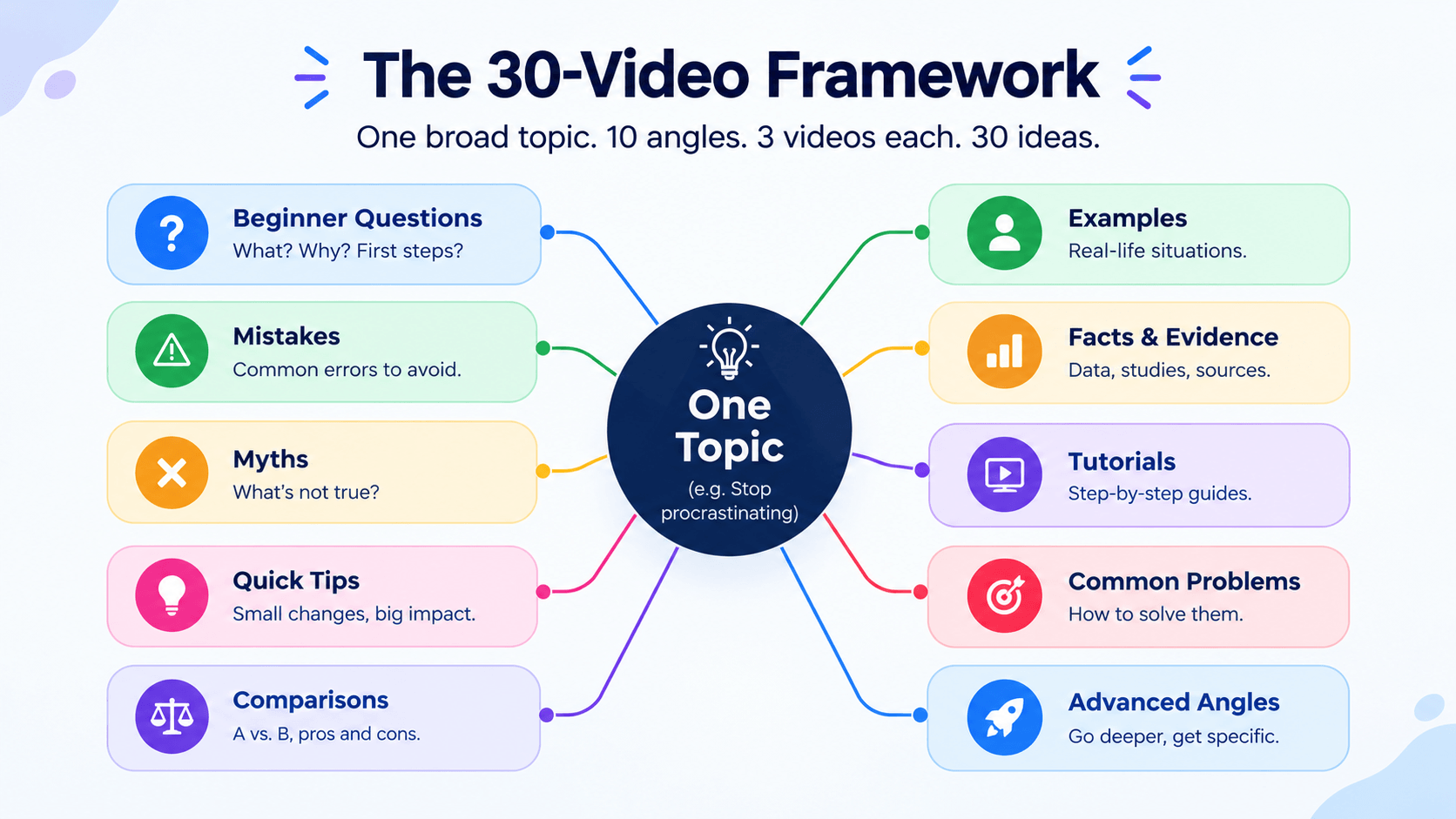
Build a batch using 10 angle types and three videos under each:
Beginner questions: What is procrastination? Why do I procrastinate? What should I do first?
Mistakes: Waiting for motivation, making tasks too vague, planning without starting.
Myths: “I work better under pressure,” “multitasking saves time,” and similar assumptions.
Quick tips: Two-minute starts, removing distractions, setting a visible next action.
Comparisons: To-do list vs. calendar, morning vs. evening planning, deep work vs. short sprints.
Examples: A student, freelancer, or business owner applying the method.
Facts and evidence: Explain a verified finding or statistic and cite the source.
Tutorials: Show exactly how to set up a simple system or complete one task.
Common problems: What to do when the system feels overwhelming or becomes another chore.
Advanced angles: Designing an environment, reviewing your workflow, or preventing recurring distractions.
That gives you 30 distinct starting points. Each video must deliver a different payoff. Reusing the subject is strategic; repeating the substance is not.
TTurn the list into a content system
Once you have 30 ideas, group them into three to five recurring pillars. Content-pillar frameworks help keep a channel focused while leaving room for variety; Sprout Social recommends a small set of repeatable themes that can be reviewed as performance changes. social media content pillars guide
Then assign each idea a format: a “mistake” can become a fast list, a beginner question an explainer, and a comparison a side-by-side video.
Think of the system as:
Topic × angle × format = a larger idea bank.
It also makes batching easier. Instead of inventing a new structure every morning, produce several videos from the same format while changing the substance.
Let AI handle repetition, not judgment
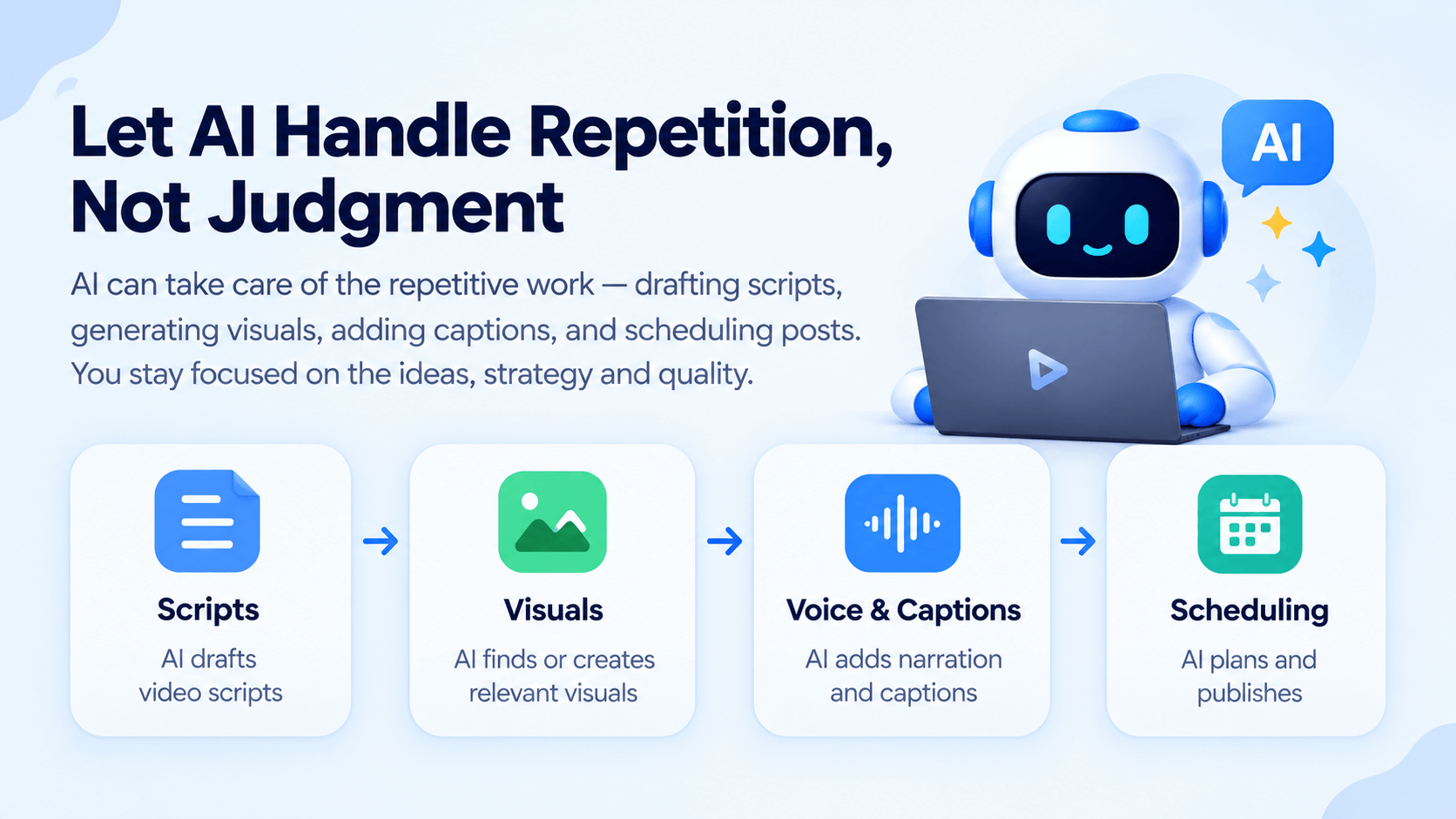
This is where AI content creation becomes useful. Once the strategy is clear, tools can reduce repetitive work such as drafting scripts, generating visuals, producing narration, adding captions, formatting videos and scheduling posts.
AutoReels is built around repeatable series. You can choose a topic, style, voice, language, format and publishing schedule, preview upcoming videos, and edit them before they go live. how AutoReels works
That shifts attention from mechanical production toward decisions that require context.
But automation is not quality control. Read scripts, check factual claims, remove weak hooks and reject repetitive ideas. Google recommends people-first content and warns against extensive automation that produces content without adding value. Google's people-first content guidance
If you want the production side to run on a schedule, AutoReels also documents how its automated workflow handles generation and publishing while keeping a review step in the process. AutoReels automation guide
Build a weekly feedback loop
Your first 30 ideas are hypotheses, not a contract. After publishing, look for patterns: which topics get viewers to choose, keep watching, comment, share or subscribe?
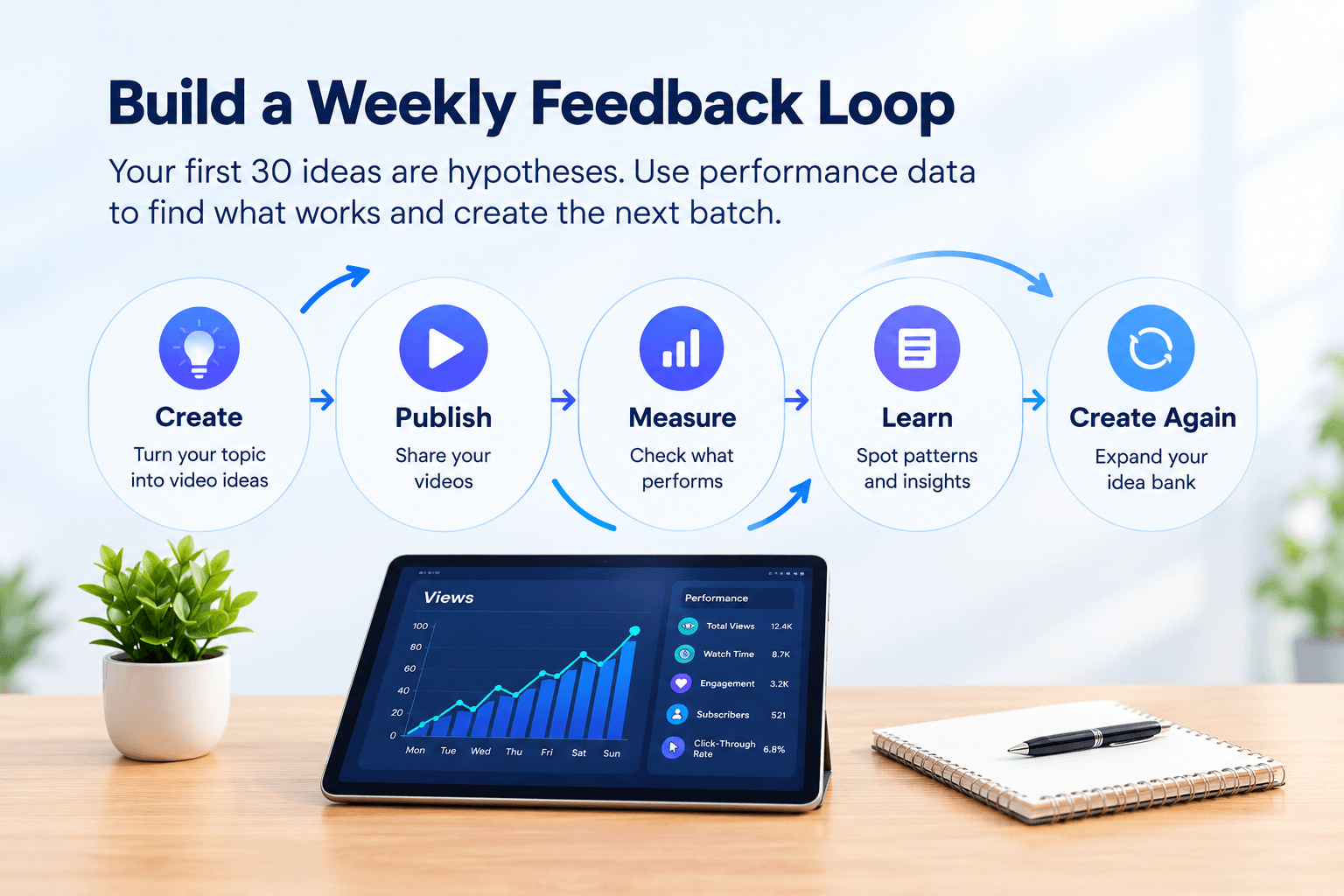
YouTube's Shorts analytics can show views, subscribers, shown-in-feed data and how many viewers chose to watch rather than swipe away. YouTube also recommends looking for patterns in top-performing Shorts and using audience response to guide what you create next. YouTube Shorts analytics guidance
TikTok likewise says its recommendation systems use signals including user interactions, content information and user information. TikTok recommendation system explained
So your workflow becomes:
Create → publish → measure → learn → expand → create again.
A strong video is also research for the next batch.
Make repurposing part of the workflow
You can extend each idea across formats instead of treating every platform as a separate content factory. Buffer distinguishes adapting an idea for a new format from simply reposting the same asset, which is the more useful approach here. Buffer's content repurposing guide
One successful short could become a follow-up answering a common comment, a comparison, a tutorial, or a written post. The goal is not duplication; it is exploring the next useful question.
The machine should get smarter over time
A sustainable faceless content strategy has a simple division of labor.
You decide the audience, positioning, topics, standards and creative direction. AI helps with repetitive production. Automation keeps the pipeline moving. Analytics tell you which assumptions deserve another test.
AutoReels can support the production and scheduling side, but the real asset is the system around it. If you can repeatedly turn one meaningful topic into distinct angles, test those angles, and feed the results back into your idea bank, you no longer need to find a new idea every day.
And that is the real promise behind one idea becoming 30 videos: not more content for its own sake, but more useful ways to serve the same audience.