The Short-Form Content Map: Turn Audience Questions Into a Distinct Video Series

Publishing short-form videos consistently is easier when every post does not begin from zero. Turning ideas into scripts, visuals, editing, and scheduled posts can become a second job. An AI short-form video creation workflow can reduce repetitive work—but the goal is to explain useful ideas from different angles, not publish more of the same.
Start with a question your audience cares about, then build a series that answers it one video at a time.
Start with a real audience problem
Collect questions from customer conversations, comments, support messages, reviews, and search suggestions. Look for recurring problems, misconceptions, decisions people struggle with, or small wins they want to achieve.
For example, a bakery might explore “How do I keep homemade bread fresh?” A marketing consultant might answer “Why do visitors leave my website without contacting me?” Both topics contain smaller questions that can become useful videos.
Write down the audience, the problem, and what viewers should understand after watching. This brief keeps the series focused. Sprout Social’s guide to social media content pillars offers a framework for grouping posts around consistent audience interests.
Map the topic into different angles
Do not split one idea into several clips by changing only the wording. Build a map of different viewer needs. For a bread-freshness series, angles might include:
A quick tip: how to store a loaf overnight.
A common mistake: why refrigeration can make bread stale faster.
A comparison: paper bag versus airtight container.
A mini tutorial: how to freeze and thaw slices.
An FAQ: whether crusty and soft breads need different storage.
A myth check: what a bread box can and cannot do.

Each angle should deliver a different takeaway. Combine ideas that need the same explanation; separate those that answer new questions. One research effort can inform a series while every post offers standalone value.
Track the question, angle, takeaway, visual idea, call to action, and publication date in a simple list.
Write one focused hook and script per video
Short videos have little room for a long introduction. Open with the problem, a useful distinction, or the outcome viewers want. “Three ways to keep bread fresh” is clearer than “Today I want to talk about something interesting.” Avoid exaggerated promises or curiosity gaps the video never resolves.
Build each script around one main point:
Hook: name the question or problem.
Explanation: give one useful answer, step, or comparison.
Example: show the advice in practice.
Close: summarize the takeaway or invite a relevant follow-up.

Use conversational language and remove sentences that do not support the main point. If a subject needs too many caveats, simplify the angle instead of cramming everything into one clip.
Plan the visual explanation at the same time. A comparison needs contrasting examples; a tutorial may need numbered steps; a mistake-focused video can show the wrong approach followed by a better one. Captions should support the message without covering important details. Check facts, names, pronunciation, and instructions before publishing.
Use AI to reduce repetitive production work
Depending on the tool, AI can help draft scripts or create elements for faceless videos, such as visuals, narration, and captions. It works best when the brief is specific. “Make videos about marketing” is vague; “explain one reason a landing page may confuse visitors” gives the tool a clearer direction.
Treat AI output as a first draft, not a quality guarantee. Check facts, remove generic phrasing, and ensure every video has a distinct purpose. Use material you own or have permission to use, and review platform rules. Google's helpful content guidance emphasizes making content that genuinely helps its intended audience—a useful editorial test for videos, too.
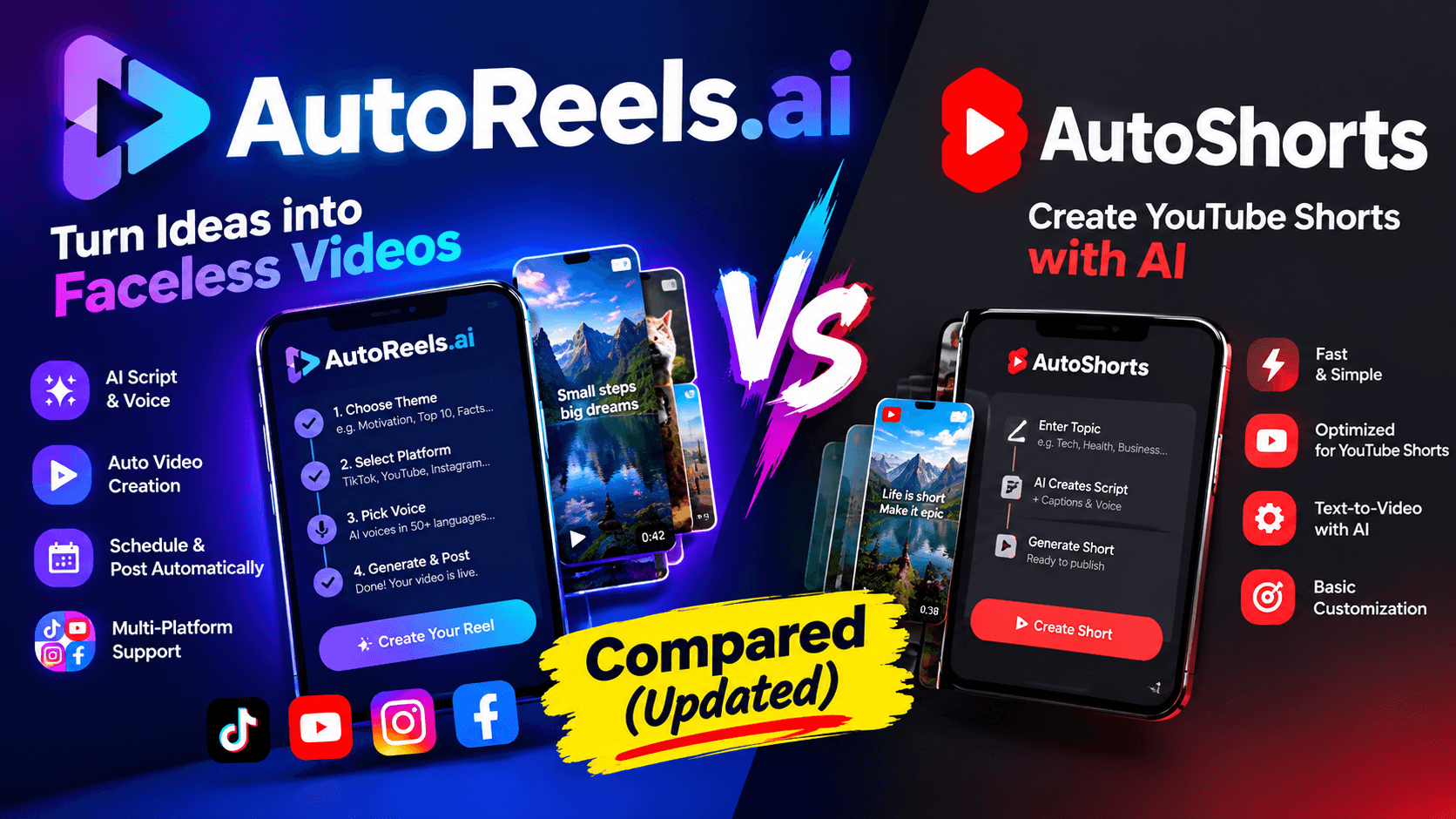
For repeatable faceless-video production, AutoReels describes a workflow built around video series, customizable prompts, narration, music, art styles, video length, and scheduling or posting options. Its guide to automating Reels with AI explains how series settings can organize recurring production. For another practical starting point, read its guide to making faceless Reels with AI. Let tools handle suitable repetitive steps, while you retain control of the topic, script review, and final editorial decisions.
Keep the series useful, not repetitive
Consistency does not mean repeating the same substance. Keep the format recognizable but change the question, example, or lesson. Skip near-duplicate clips made only to fill a calendar. Vary formats with checklists, demonstrations, before-and-after examples, replies to comments, or myth checks. Make each post understandable on its own, and use genuine audience questions to plan the next batch.
Review the batch and improve the next one
Set aside time each week to review results. Depending on your goal and platform, useful signals can include watch time, retention, saves, shares, comments, profile visits, or clicks. YouTube Analytics includes reports that help creators understand how viewers find and interact with videos.

Compare videos with similar goals rather than treating one result as a universal rule. If viewers leave early, test a more direct opening. If a tutorial prompts thoughtful questions, make a follow-up. If a topic gets little response, try a clearer angle before abandoning it. Keep a short note of what changed and what happened; this creates a feedback loop from audience questions to planning, production, and improvement.
Build a workflow you can sustain
A strong short-form video workflow starts with a real audience need, expands it into distinct angles, and gives every video one clear takeaway. AI can reduce repetitive tasks, but human review keeps the series useful. Choose one question, plan five different videos, publish at a sustainable pace, and learn from the response. Explore AutoReels to see whether its series-based workflow fits your process.